
Platform

Clients
Company
Resources
Partners
Most retail marketing programs see only part of the customer journey. Activate point-of-sale (POS) data across email, SMS, RCS, app, and website personalization to generate more repeat purchases, convert more digital traffic, drive more store revenue, and measure the total impact of your marketing.
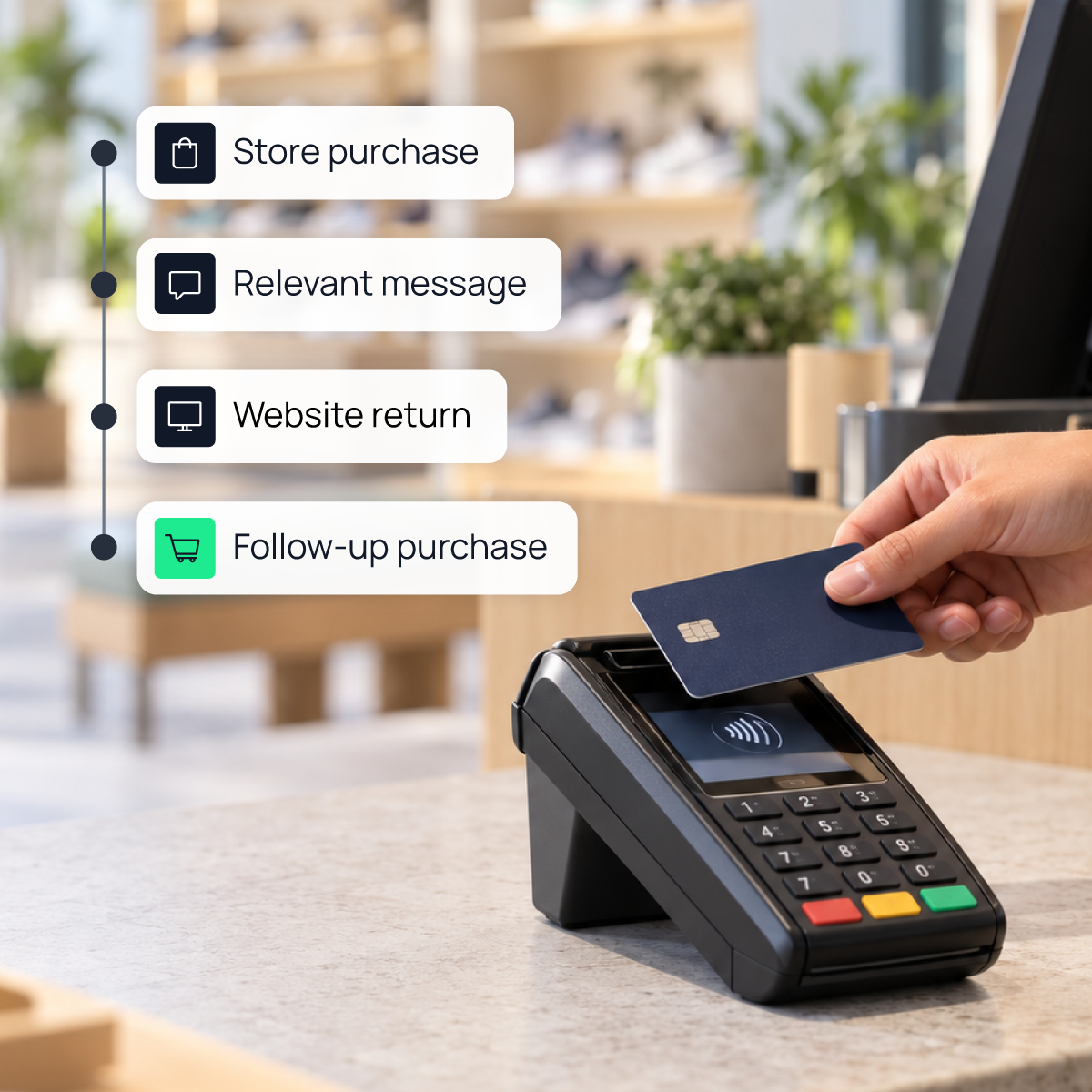
Marketing that stops at the ecommerce checkout costs revenue: missed automation, weaker recommendations, and in-store sales marketing can’t claim.
Customers who regularly purchase in stores may be mistakenly treated as lapsed, receiving win-back discounts or being suppressed from campaigns they should see.
Thank-you, replenishment, loyalty, and win-back journeys often trigger only from ecommerce orders, leaving most of a retailer’s purchases with no follow-up at all.
A customer’s strongest product, category, brand, and basket size may be hidden inside their store purchase history.
In-store order activity connects to the same customer profile powering your digital marketing. No separate store marketing program required.
The transaction lands on their existing customer profile.
An SMS or RCS message suggests the companion product.
Product care and replenishment trigger from the store order.
Recommendations reflect what they bought and where they shop.
Online or in store, revenue credits the campaigns behind it.
The relationship between stores and digital channels should work in both directions. Use every digital channel to encourage store visits, promote local opportunities, and give customers flexible ways to redeem offers.
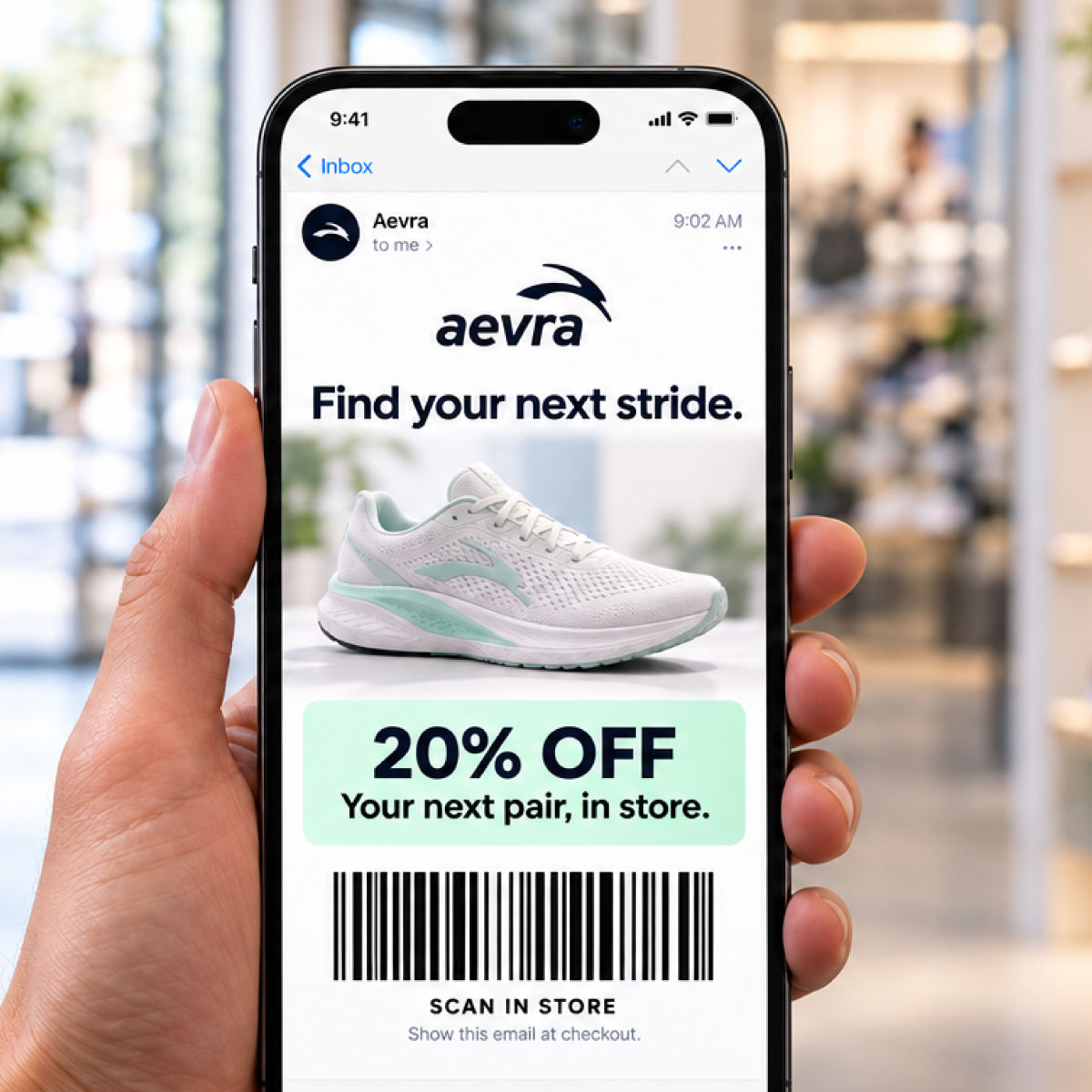
Use preferred store, purchase location, store number, geography, and the items a customer bought in-store to tailor messaging and decide what to promote next.
Share store events, new openings, appointments, product launches, associates, and location-specific promotions.
Promote reserve-in-store, buy online, pick up in store (BOPIS), nearby availability, or products the customer may want to see in person.
Use scannable barcodes, QR codes, or coupon codes that work at the register, online, or across both environments.
Wait a configurable number of days after a store purchase, then send an offer built around that customer’s category and brand preferences.
Downtown Flagship, 1.2 mi away
In-store styling session, Saturday
Valid online or in-store
Footwear & running apparel
The post-purchase period is one of the most valuable moments in the customer relationship. When store transactions become available in Listrak, every purchase can begin an immediate response and a longer-term cross-channel journey.
Send an app push notification, SMS, or email shortly after the store transaction with a thank-you, relevant next step, or unique offer.
Enter the customer into a longer journey covering product care, recommendations, loyalty, and replenishment.
Use the product, category, brand, store, order value, purchase frequency, or loyalty status to decide which barcode or QR code offer to send.
Check whether an offer was redeemed before sending a reminder. Customers who have already converted can exit or receive a different follow-up.
A shopper who purchased in-store should not return to a generic website experience. With Experience Builder, store purchase activity, product affinity, preferred location, loyalty status, active offers, and redemption status make the entire website visit more relevant.
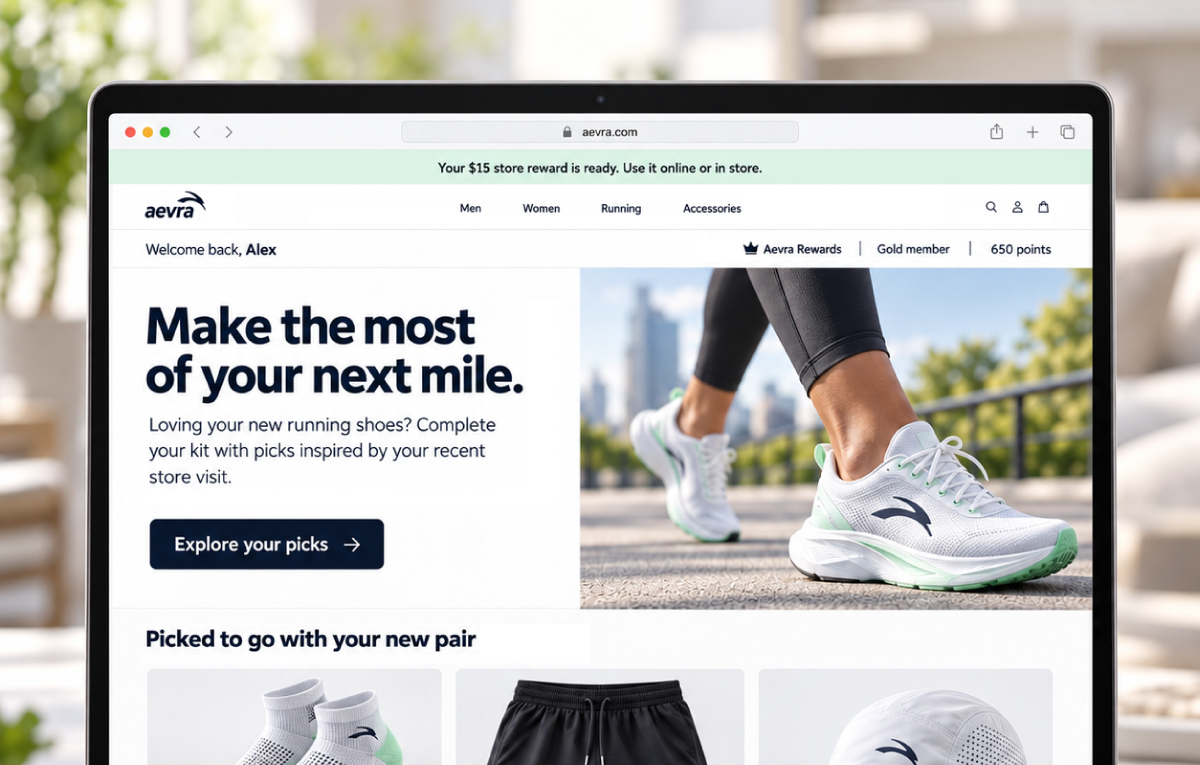
Recognize customers who recently visited a store and continue the relationship when they return online.
Show complementary products, replenishment opportunities, care content, or relevant categories based on what the customer bought in-store.
Allow customers to see and redeem eligible store-generated offers online or in-store rather than creating disconnected promotions.
Display loyalty status, available rewards, tier progress, or VIP benefits within the website experience.
Keep an active store-generated offer, redemption deadline, loyalty balance, or tier status visible across the website. The banner can disappear when the offer is redeemed or expires.
Welcome the shopper back with content based on a recent store visit, purchase, current offer, or preferred location.
Sort and filter category results around the shopper’s preferred store and recent store purchases so browsing reflects where they actually shop.
Show complementary-product or reserve-in-store messaging. VIP customers can also see relevant benefits such as early access or free shipping.
A customer’s value should not depend on where the transaction occurred. Combining online and in-store behavior creates a more accurate view of customer value and allows retailers to recognize, reward, and retain their best shoppers across every channel.
Use total purchase history, order value, and loyalty status across stores and online to spot high-value customers in real time.
Invite non-members to join after an in-store purchase and count that transaction toward their first reward.
Invite high-value customers to new product drops, store events, or promotions before the general audience.
Celebrate loyalty tiers, purchase anniversaries, or significant achievements through email, SMS, RCS, or mobile push.
Display VIP status or relevant benefits within the website or customer account experience.
Identify customers approaching a higher tier and encourage the next action that moves the relationship forward.
A customer may click an email or SMS, and later buy in a store. Without connected data, that revenue disappears from reporting. Listrak links digital engagement to store purchases so you can see which campaigns drive total retail revenue.
Measure revenue influenced across online and physical store purchases instead of stopping at ecommerce conversion.
Understand which messages, journeys, audience segments, product recommendations, and offers contribute to downstream store purchases.
Use a more complete view of performance to refine targeting, promotions, channel strategy, and budget allocation.
The biggest impact often starts with the simplest programs.
Even a standard thank-you message can become a meaningful revenue stream when every purchase, not only an ecommerce order, can trigger it.
Use in-store purchase signals directly across every channel, recommendation, and journey you already run.
Use redemption, purchase, loyalty, engagement, and channel availability to determine the next appropriate action.
Work with Listrak’s retail strategy and services teams to identify opportunities and improve performance.
Bring in-store transactions that include a customer email address into Listrak.
Add those purchases to each shopper’s unified history and customer profile.
Use store behavior across campaigns, journeys, mobile engagement, website experiences, recommendations, loyalty, offers, and reporting.
Activate in-store data across email, SMS, RCS, app, and website personalization. Generate more repeat purchases, convert more traffic, and reveal your marketing's total impact.

In-store marketing often means promotions and displays inside a store. For a retailer running digital channels, it also means using physical store activity, such as purchases, preferred location, and loyalty behavior, to inform and trigger marketing. When that store activity is connected to digital channels, in-store marketing becomes part of the same program that runs email, SMS, RCS, app push notifications, and website personalization rather than a separate effort.
Omnichannel retail connects customer identity, behavior, and purchase activity across physical stores and digital channels. It allows activity in one channel to influence the customer’s experience in another.
When an in-store transaction includes the customer’s email address, Listrak can connect the purchase with the customer profile and use it across segmentation, personalization, and cross-channel engagement.
Yes. A store purchase can trigger an immediate mobile response and enter the customer into a longer journey covering thank-you, review, replenishment, product-care, loyalty, cross-sell, VIP, or win-back messaging.
No. A loyalty program adds tier and reward data, but store purchase, product, and location activity can drive segmentation, journeys, recommendations, and personalization on their own.
Yes. Using Experience Builder, store purchase history, product affinity, loyalty status, active offers, and preferred location can personalize persistent banners, homepage content, category and product pages, recommendations, cart messaging, checkout, and store-specific content.
When email and SMS clicks and store transactions are connected to the same customer profile, retailers can identify store purchases that followed a click and include that revenue in performance reporting. This is often called offline attribution.
Yes. Store purchase activity can be considered when determining whether a customer is active or lapsed, helping prevent inappropriate win-back messages and unnecessary discounts.
Yes. Using both store and ecommerce purchase history creates a more complete view of product, brand, category, price, and replenishment affinity.
Yes. Store number, preferred location, geography, purchase location, and local behavior can be used to personalize store names, events, inventory, associates, and regional offers.
Multichannel marketing operates across several channels. Omnichannel marketing connects customer data and behavior across those channels so an action in one channel can inform the experience in another.
Listrak connects customer identity, engagement, purchase, browsing, and channel activity within one platform. Store data enriches that existing customer profile and becomes available for activation across the program. See how the Listrak Data Platform builds that profile.
Requirements depend on the desired use cases. Each store order needs the customer’s email address to connect to their profile. Listrak works with each retailer to validate available customer, order, product, source, location, and redemption information and determine the appropriate implementation.


