


Download the 2022 Email Trends and Observations Report
Oops! Something went wrong while submitting the form.


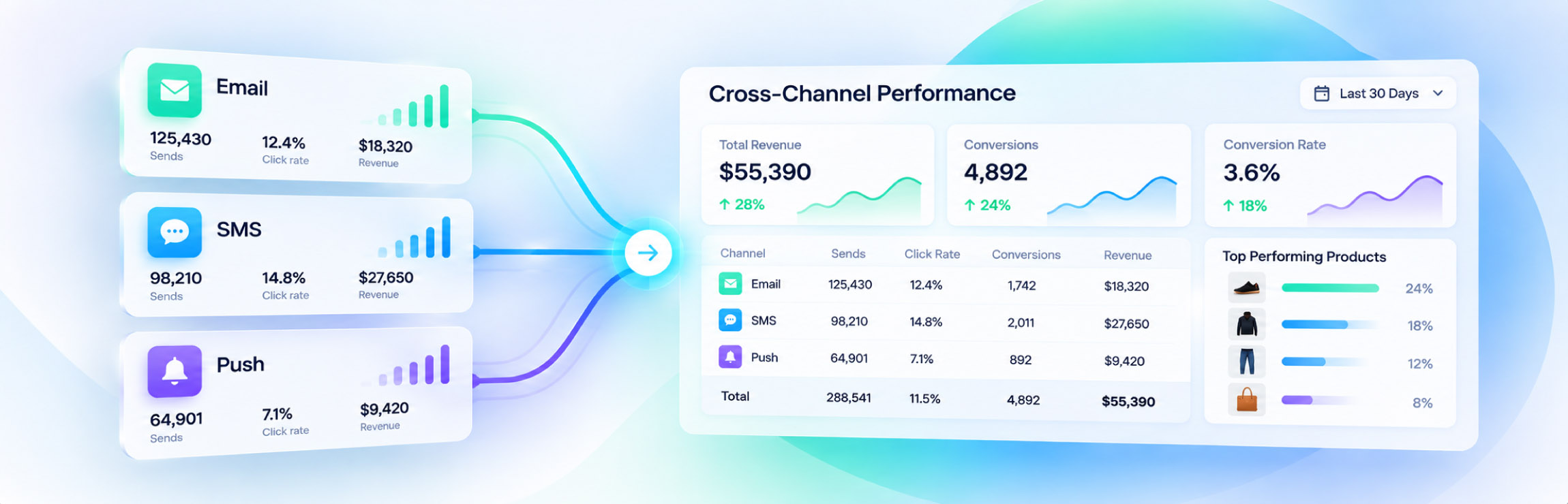
If your team reports on Email performance in one dashboard, SMS in another, and push notifications somewhere else entirely, you already know the problem: none of those numbers alone tells the full story. A customer who opens an Email on Monday, gets a back-in-stock text on Wednesday, and buys on Friday doesn't experience your brand as three channels. She experiences it as one relationship. Your reporting should too.
This isn't just a reporting challenge. It's a business challenge. When channel performance is measured in silos, the channel that happens to sit closest to the sale can get more credit while supporting channels are overlooked. Decisions about where to invest follow the reporting, so having a more complete view of what's driving performance matters.
Looking across channels can reveal patterns that aren't always obvious when retailers evaluate them one at a time:
You don't need a new BI stack to see this clearly. You need the right reporting. Listrak reporting capabilities give marketers the flexibility to build, save, and reuse reports that bring cross-channel performance and conversion data together.
Two reports can provide a much clearer view:
Listrak clients can use Exportable Reports to build and customize these views. See how to get started with Exportable Reports.
Once those reports are saved in Listrak, the analysis is simple: filter to a campaign or date range, group by channel, and look at revenue and conversion share side by side. Over time, patterns can emerge that show where channels may be under- or over-credited relative to what the item-level order data shows.
The value grows when this becomes routine rather than a quarterly deep dive. Schedule the cross-channel conversion report to land in your inbox weekly or monthly and review it alongside your per-channel dashboards rather than replacing them.
The goal isn't to abandon channel-specific metrics. It's to add a more complete view of how your channels are working together to influence customer behavior and drive revenue.
That changes the questions marketers can ask in planning meetings. Instead of only asking, “How did Email do this month?” teams can ask, “How are our channels working together to drive engagement, conversions, and revenue?”
That's the bigger question, and one that cross-channel reporting can help answer.


